
Heart valve surgery
Mitral valve surgery
Repair or replacement of the mitral valve when it is narrowed or leaking.
What is it?
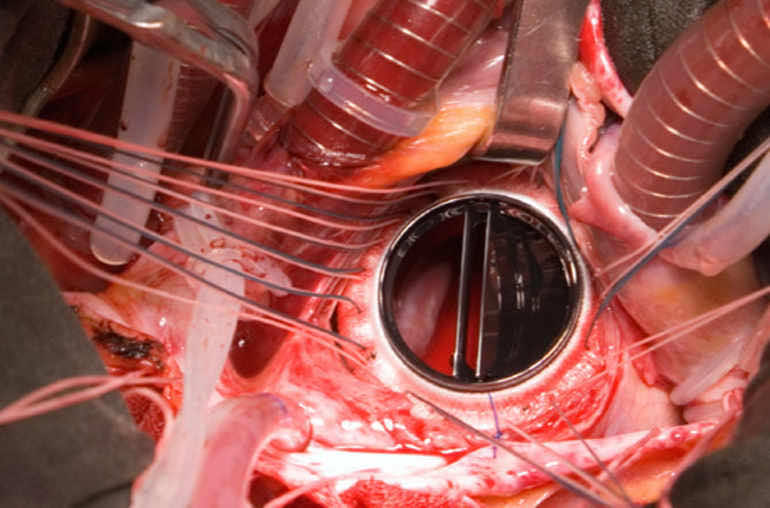
The mitral valve lies between the left atrium and the left ventricle. It opens to let blood through, then closes to prevent it from flowing back. When it becomes narrowed (stenosis) or leaks (regurgitation), the heart and lungs are placed under extra strain. Surgery aims to repair the valve, or to replace it when repair is not feasible.
Step by step
- 1
The work-up includes an echocardiogram, sometimes performed through the oesophagus (a probe passed into the food pipe). It defines the mechanism of the disease and the indication for surgery.
- 2
The operation is performed under general anaesthesia. You are asleep for its entire duration.
- 3
The surgeon reaches the heart through the chest: a sternotomy or, in selected cases, a short side incision (minimally invasive approach).
- 4
A heart-lung machine temporarily takes over circulation and oxygenation while the surgeon works on the valve.
- 5
The valve is repaired whenever this is possible; otherwise it is replaced with a mechanical or biological prosthesis. The choice is discussed with you before surgery.
- 6
The result is checked by echocardiography in the operating room. You are then transferred to intensive care for postoperative monitoring.
Benefits and expected outcome
The aim is to restore normal valve function and reduce the strain on the heart. In most patients, breathlessness decreases and exercise tolerance improves over the following weeks. Repair, when it is possible, preserves your own valve.
Recovery and follow-up
Hospital stay is usually about a week, the first days in intensive care. Walking is resumed under the supervision of the team, at a pace set with you. With a mechanical prosthesis, lifelong anticoagulant treatment (medication that thins the blood) is prescribed, with regular blood tests. Follow-up consultations and a control echocardiogram are scheduled.
This page is for information and does not replace a medical consultation. Each situation is different and is assessed individually.
Appointment
An opinion on your situation?
Don't wait to talk about it: book an appointment.