
Congenital heart defects
Coarctation of the aorta
Correction of a localised narrowing of the aorta (coarctation), most often congenital.
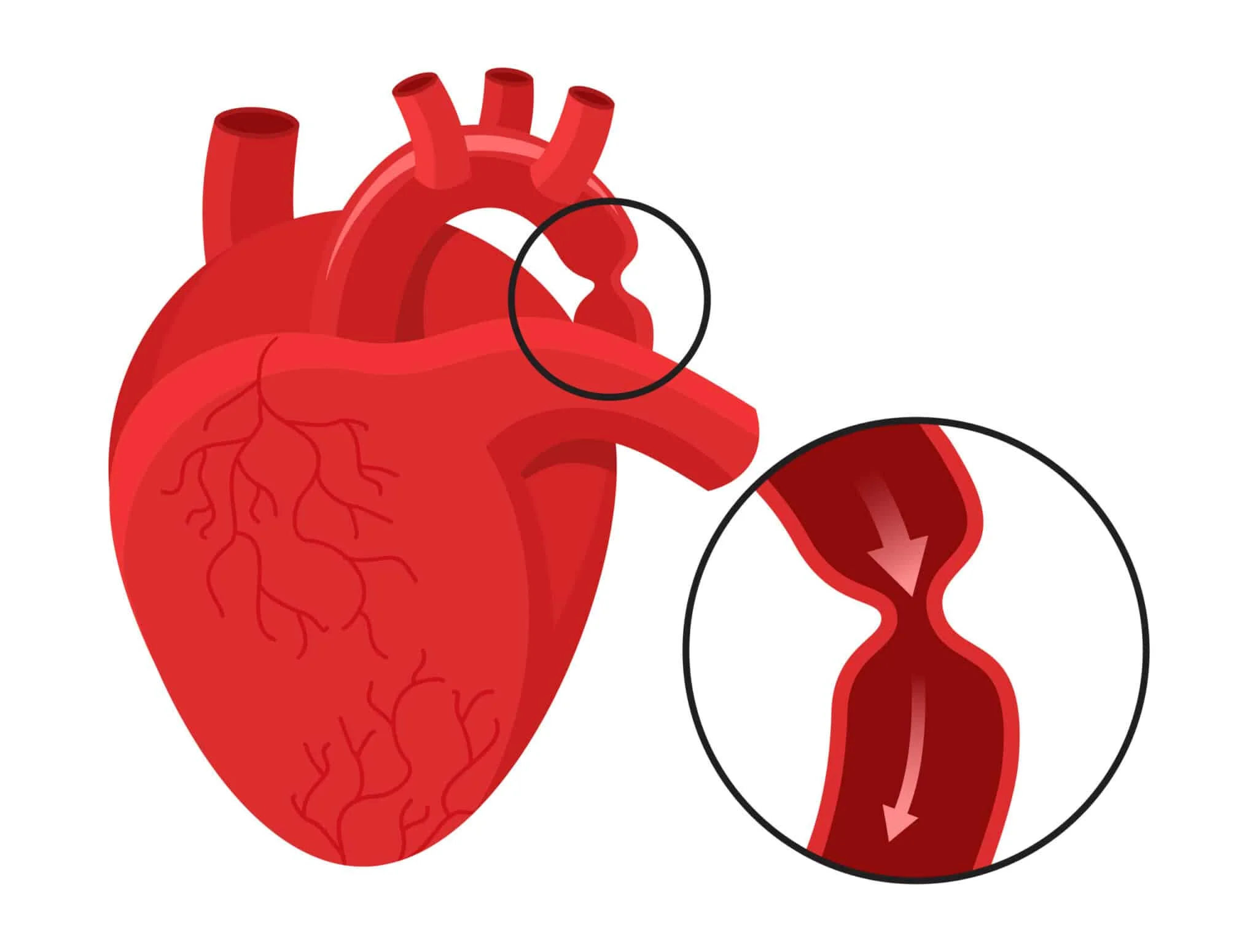
What is it?
The aorta is the large artery that leaves the heart and distributes blood to the whole body. A coarctation is a localised narrowing of this artery, most often just beyond the vessels that supply the head and the arms. The heart has to work harder to push blood past the narrowing: pressure is high in the arms and flow is reduced in the lower body. It is present from birth and is found either in the newborn or later, when high blood pressure or weak femoral pulses are noted.
Step by step
- 1
The work-up includes blood pressure measurement in the arms and the legs, examination of the pulses, an echocardiogram and, depending on age, a CT scan or MRI of the aorta.
- 2
The operation is performed under general anaesthesia: your child remains asleep for the whole procedure.
- 3
The surgeon reaches the aorta through an incision on the left side of the chest. This procedure does not usually require cardiopulmonary bypass.
- 4
The narrowed segment is removed and the two ends of the aorta are stitched together. In some cases the passage is widened with a patch or replaced with a prosthetic tube.
- 5
Blood flow is restored and checked, a drain is placed and the chest is closed.
- 6
Your child is monitored in intensive care during the first days. Blood pressure is followed closely and treated if necessary.
Benefits and expected outcome
The aim is to give the aorta a normal calibre, so that blood reaches the lower body without obstruction and the heart works against a lower pressure. Blood pressure falls in most patients after the operation, which protects the heart, the brain and the kidneys in the long term. Treatment for blood pressure is still needed in some cases after surgery.
Recovery and follow-up
Hospital stay usually lasts a few days; the drain is removed early and pain is treated. Activities are resumed gradually, according to the discharge instructions and your child's age. Follow-up includes regular blood pressure measurement in the arms and the legs together with an echocardiogram, since the narrowing can recur over time. This follow-up continues in the long term, including into adult life.
This page is for information and does not replace a medical consultation. Each situation is different and is assessed individually.
Appointment
An opinion on your situation?
Don't wait to talk about it: book an appointment.