
Aortic surgery
Aortic dissection
A tear in the wall of the aorta requiring emergency management in a specialised centre.
What is it?
The aorta is the large artery that leaves the heart and distributes blood to the whole body. Its wall is made of several layers. An aortic dissection occurs when a tear in the inner layer allows blood to enter between these layers. It is a medical emergency that requires immediate management in a specialised centre.
Step by step
- 1
You are admitted as an emergency. The diagnosis is confirmed by a CT angiogram of the chest (a cross-sectional X-ray with contrast dye).
- 2
Pain is treated and your blood pressure is lowered intravenously to reduce the strain on the aortic wall.
- 3
The type of dissection is determined by the segment involved. Involvement of the ascending aorta requires emergency surgery; involvement of the descending aorta is usually treated with medication or an endovascular procedure.
- 4
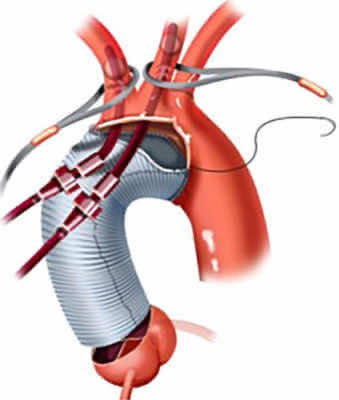
If surgery is required, it is performed under general anaesthesia: the torn segment of the aorta is replaced with a vascular graft (a tube of synthetic fabric).
- 5
You are then transferred to intensive care, where your blood pressure, breathing and kidney function are monitored continuously.
- 6
Follow-up includes scheduled imaging checks and long-term blood pressure medication.
Benefits and expected outcome
The aim of treatment is to stop the tear from extending and to restore normal blood flow to the organs. Emergency management also aims to control pain and stabilise blood pressure. Later follow-up allows the diameter of the aorta to be monitored and treatment to be adjusted.
Recovery and follow-up
The length of hospital stay depends on the type of dissection and the treatment carried out; it usually includes a period in intensive care followed by a cardiac surgery ward. Return to activity is gradual and directed by your surgeon. Blood pressure control is a central part of the treatment and is continued for life. Follow-up imaging is scheduled at regular intervals.
This page is for information and does not replace a medical consultation. Each situation is different and is assessed individually.
Appointment
An opinion on your situation?
Don't wait to talk about it: book an appointment.