
Cardiac tumour surgery
Aortic thrombosis
Management of a clot obstructing the aorta, by medical treatment or intervention depending on the case.
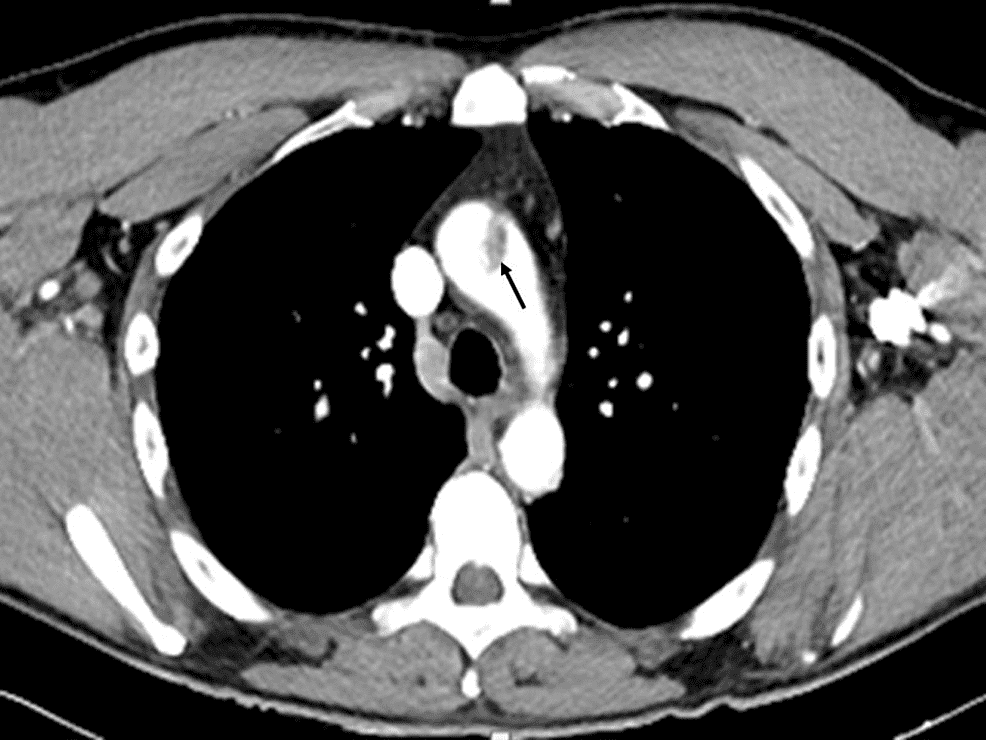
What is it?
The aorta is the large artery that carries blood from the heart to the rest of the body. Aortic thrombosis means that a clot has formed inside the aorta and is obstructing blood flow. Depending on its size and position, it can reduce the blood supply to the abdominal organs or to the legs. Management is decided from the imaging findings and your symptoms.
Step by step
- 1
A clinical examination checks the pulses, temperature and colour of your limbs, along with any pain.
- 2
A CT angiogram (a cross-sectional X-ray with contrast dye) locates the clot and shows how far it extends.
- 3
Blood tests look for an underlying cause that favours clot formation, in particular a clotting disorder.
- 4
Anticoagulant treatment (medication that thins the blood) is started to stop the clot from extending.
- 5
If the blood supply to an organ or a limb is compromised, a procedure is carried out to remove or bypass the clot, by catheter or by surgery depending on the situation.
- 6
Monitoring then focuses on your circulation, your kidney function and the balance of the anticoagulant treatment.
Benefits and expected outcome
The aim is to restore blood flow beyond the clot and to prevent it from extending. Treatment also aims to prevent recurrence by correcting the identified cause where that is possible. Follow-up allows the anticoagulation to be adjusted and the patency of the aorta to be checked.
Recovery and follow-up
The length of hospital stay depends on the severity of the condition and the treatment chosen. Walking and daily activities are resumed gradually, following the care team's instructions. Anticoagulant treatment is often continued after discharge, with regular blood tests. Follow-up consultations are scheduled to check your circulation.
This page is for information and does not replace a medical consultation. Each situation is different and is assessed individually.
Appointment
An opinion on your situation?
Don't wait to talk about it: book an appointment.